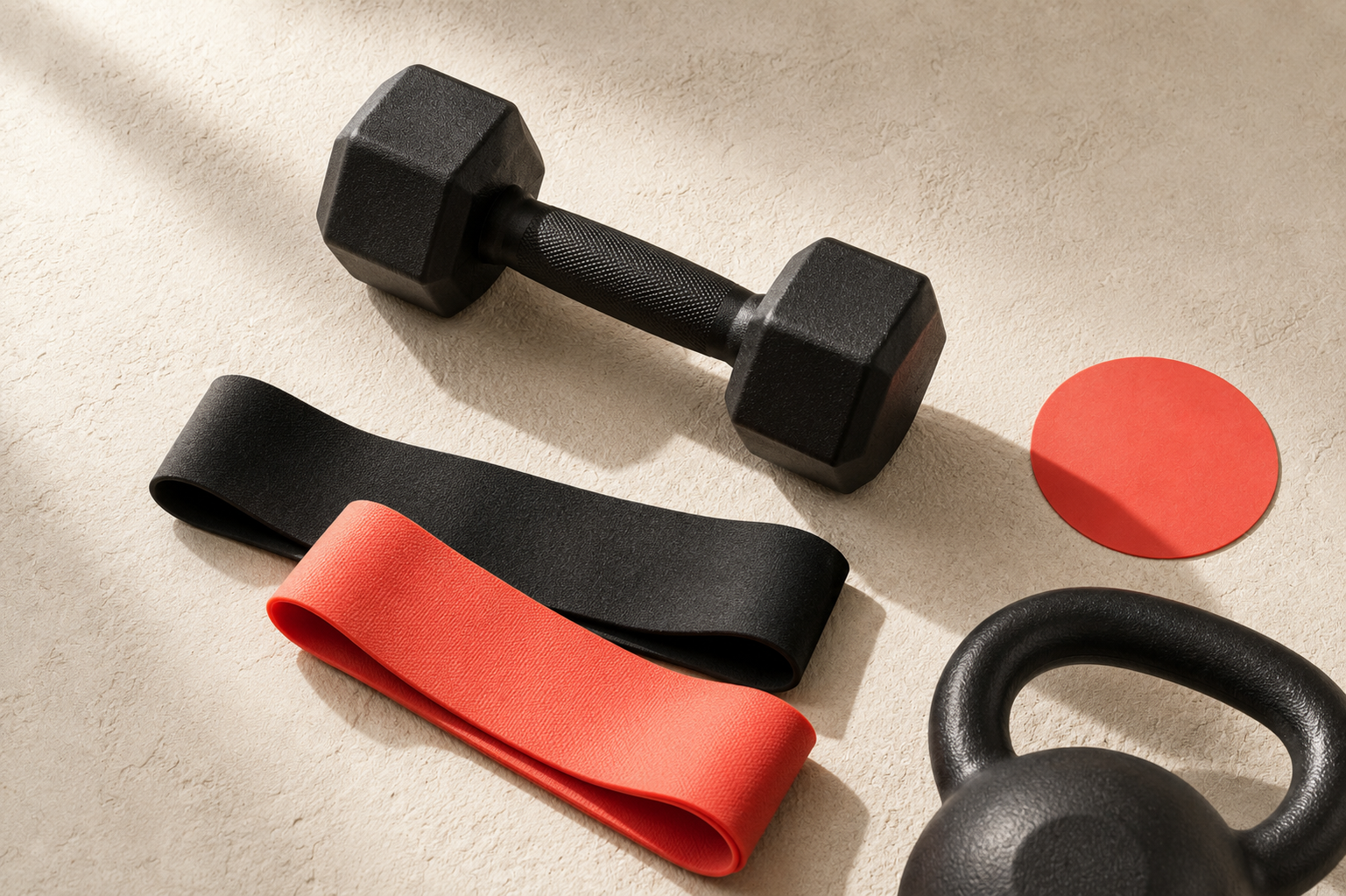
There isn’t one best resistance band for everyone. A useful starting point is to match the band’s design to the movements you plan to do, then check whether the product details are clear enough for you to choose confidently.
How a band can support a movement goal
In a home exercise plan, the right band may make it easier to adjust resistance, change hand placement, or set up an exercise without bulky equipment. Those features can make a routine more practical for a small space or a particular strength goal.
My PT perspective is to explain what the tool changes and what you still need to evaluate: the exercise instructions, the band’s resistance, and whether its setup feels manageable for you. A band is a tool, not a substitute for clear guidance or a promise of a specific result.
1. Start with the band style
“Resistance band” can describe several different designs. Think about the space you have, the kind of grip you prefer, and whether you want the band to work with accessories.
| Style | What to check | May suit you if… |
|---|---|---|
| Mini loop | Loop circumference, width, material, and the set’s listed resistance range. | You want a compact band that stores easily. |
| Long loop | Length, thickness, material, and whether the maker gives clear use and care instructions. | You want more room to change your hand or foot position. |
| Tube with handles | Handle comfort, connection points, included accessories, and the maker’s setup guidance. | You prefer a hand grip or want a set designed around compatible attachments. |
| Fabric loop | Band width, stitching, stretch feel, wash instructions, and how it fits in your storage space. | You prefer a wider fabric feel over a thin latex loop. |
2. Read the resistance information carefully
Band colors and labels aren’t a reliable way to compare products across different brands. Check the manufacturer’s description for how resistance is labeled and whether the set includes a clearly described range or progression. If the listing only says “light,” “medium,” or “heavy,” look for a guide explaining what those terms mean for that specific set.
A multi-band set can offer more options, but only if the bands are labeled clearly and you can tell them apart during use.
3. Check materials, fit, and care
Look for the material in the product details, especially if you have a known latex sensitivity. Check the stated band length and width, stitching or connection details, and cleaning instructions. Clear specifications make it easier to judge whether the product fits your preferences and storage setup.
4. Confirm what comes in the package
Product photos can show accessories that aren’t included. Read the package list to confirm whether handles, door anchors, carrying bags, or an instruction guide are actually part of the purchase. For any attachment, follow the manufacturer’s compatibility and setup directions.
5. Make sure the set fits your routine
Consider where you’ll keep the bands, how quickly you can set them up, and whether the set includes the options you’re likely to use. Also review return terms and the seller’s information before you order. A large bundle isn’t automatically better if most of it will stay unused.
Before you buy: a quick checklist
- Is the band style appropriate for the way you plan to use it?
- Are resistance labels and product specifications clear?
- Have you checked material, length, width, and care instructions?
- Are the handles or anchors shown actually included and compatible?
- Will it fit your space, budget, and storage needs?
Frequently asked questions
Do resistance-band colors mean the same thing across brands?
No. Check the specific manufacturer’s key or product description instead of comparing colors alone.
Should I buy a set or one band?
That depends on whether you expect to use different resistance levels. Start with the options you can identify and expect to use.
Are tube bands and loop bands interchangeable?
They have different shapes and attachment options. Compare their design and setup rather than assuming one can replace the other.
This guide is general shopping information, not individualized exercise or treatment advice. Follow product instructions and seek guidance from a qualified clinician for personal medical questions.